
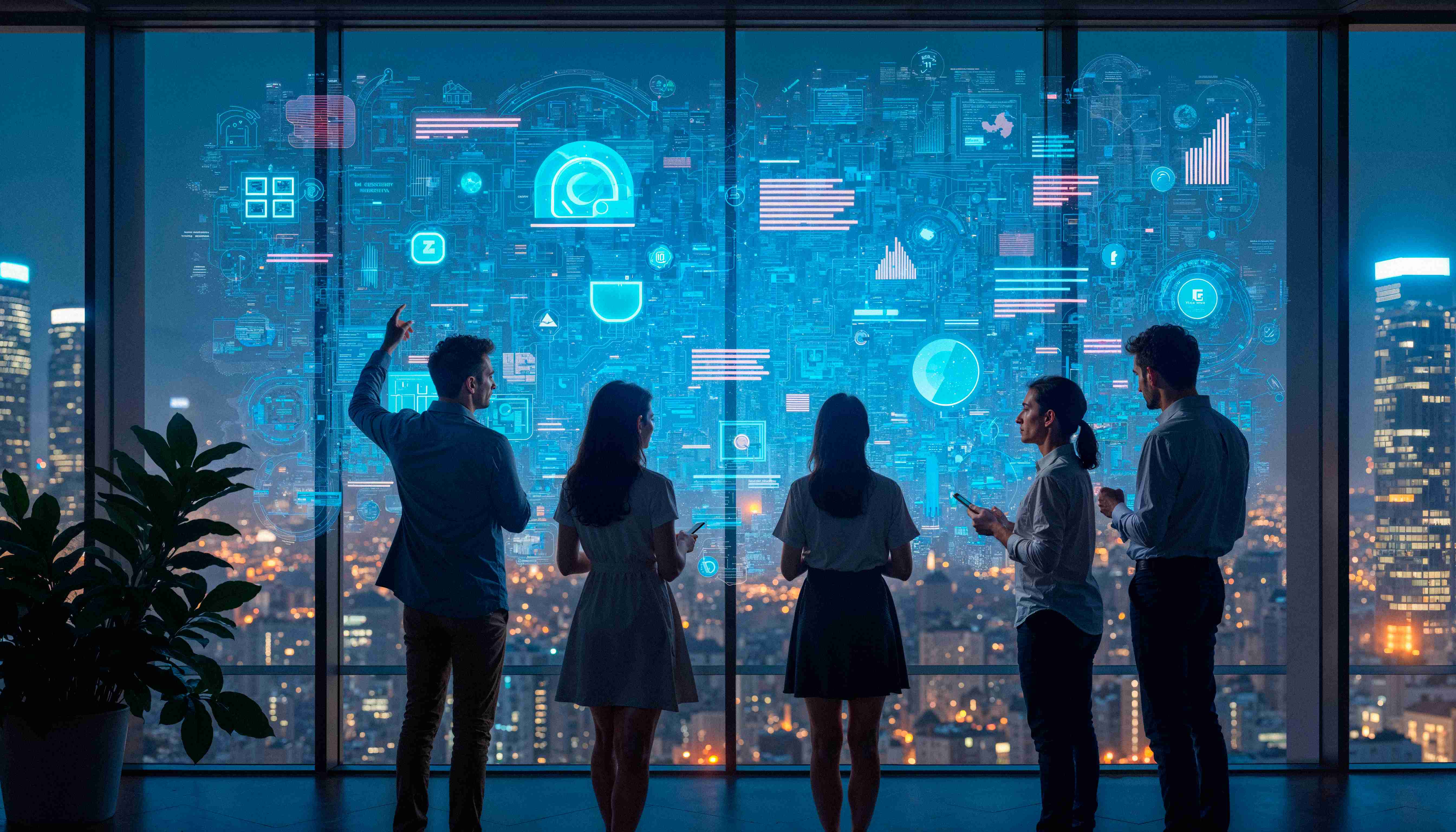
Technology is advancing at an incredible rate, and its impact on education is both profound and far-reaching. The concept of Education 4.0, shaped by the innovations of the Fourth Industrial Revolution, is redefining traditional learning methods.
In this new era, AI and other emerging technologies are not just tools but essential drivers of change. They are transforming education by making learning more personalized, accessible to a broader audience, and efficient in ways that were previously unimaginable. As these technologies become more integrated into classrooms and educational systems, they are setting the stage for a future where education is customized to the unique needs of every student, providing opportunities that are more inclusive and effective.
Artificial intelligence is rapidly transforming education by creating more personalized learning experiences for students. These systems analyze a student's performance in real time, adjusting the content and difficulty level to match their abilities and learning pace. For example, if a student is struggling with a particular math concept, the AI can slow down the lesson, provide additional resources, or offer alternative explanations until the student fully understands the material. Equally, if a student excels, the AI can introduce more challenging concepts to keep them engaged and motivated. The benefits of these AI-powered platforms extend beyond just the students. Educators also gain valuable insights through data-driven analytics that highlight trends and patterns in student performance. This information allows teachers to identify where students may need extra help, enabling them to intervene early and customize their teaching strategies accordingly. For instance, AI can pinpoint common areas of difficulty across a class, helping teachers to focus their lessons more effectively and improve overall learning outcomes. Section 2: Immersive Learning Through Virtual and Augmented Reality
Virtual Reality (VR) and Augmented Reality (AR) are revolutionizing the way students learn.A practical example of AI's impact in the classroom is the use of AI tutoring systems. These systems provide one-on-one tutoring that is typically unavailable in a traditional classroom setting. For instance, platforms like Carnegie Learning’s "MATHia" use AI to deliver personalized math instruction. The system tracks each student's progress, identifies their strengths and weaknesses, and adjusts the curriculum in real time to address gaps in understanding. Students receive immediate feedback on their work, allowing them to correct mistakes and build a solid foundation of knowledge before moving forward. Another example is the use of personalized learning platforms like "DreamBox Learning," which focuses on adaptive math instruction for K-8 students. The platform constantly assesses student performance and adjusts the difficulty level of exercises to ensure that each student remains challenged but not overwhelmed. Teachers receive detailed reports on each student's progress, enabling them to provide targeted support where needed. Section 2: Immersive Learning Through Virtual and Augmented Reality
Blended learning integrates online and in-person instruction... [full content to be added]
Virtual Reality (VR) and Augmented Reality (AR) are revolutionizing the way students learn by making abstract concepts more tangible and significantly enhancing engagement. These technologies immerse students in interactive environments where they can explore subjects in ways that traditional methods cannot match. For instance, rather than simply reading about ancient civilizations, students can take virtual field trips to historical sites, experiencing these places as if they were actually there. This level of immersion helps students to form stronger connections with the material, leading to deeper understanding and better retention of knowledge.Similarly, VR and AR are transforming science education by allowing students to conduct experiments in virtual labs. These virtual environments enable students to perform complex experiments without the constraints of physical resources, safety concerns, or geographical limitations. For example, a biology student can virtually dissect a frog, observing every detail in 3D, or a chemistry student can safely mix volatile chemicals to observe reactions that would be too dangerous to attempt in a real lab. Interactive simulations also allow students to manipulate variables and see real-time outcomes, helping them grasp complex scientific concepts through hands-on learning.Future TrendsAs we look toward the future, the adoption of VR and AR in education is expected to grow significantly, with more schools and universities integrating these technologies into their curricula. By 2024 and beyond, these tools are likely to become standard in classrooms, especially in subjects like science, history, and engineering, where visualizing and interacting with complex systems can greatly enhance learning outcomes. The increasing affordability and accessibility of VR and AR technology, combined with the development of more sophisticated educational content, will drive this expansion. Additionally, as remote and hybrid learning models continue to evolve, VR and AR will play a crucial role in providing immersive experiences that can replicate the benefits of in-person learning, even from a distance.
A notable example of successful VR implementation in education is found in the work of VictoryXR, a company specializing in virtual reality education. They have developed a wide range of VR classrooms and labs that allow students to learn in an entirely immersive environment. For instance, in their virtual biology lab, students can explore the human body in ways that are impossible with traditional models. They can walk inside a human heart to understand its structure or observe the process of cellular mitosis in 3D. These experiences not only make learning more engaging but also help students understand and retain complex information more effectively.Another example is the use of AR in the "Google Expeditions" program, which allows students to take virtual field trips using AR-enabled devices. With just a smartphone or tablet, students can explore places like the Great Barrier Reef or the surface of Mars, with educational annotations that guide their learning journey. These implementations showcase how VR and AR are not just enhancing traditional education but fundamentally transforming the way students interact with and understand the world around them.
In conclusion, technology and AI are profoundly reshaping the educational landscape, ushering in a new era of learning that is more personalized, engaging, and efficient. From AI-driven personalized learning platforms that tailor educational experiences to individual needs, to immersive virtual and augmented reality tools that bring abstract concepts to life, the ways in which we teach and learn are undergoing dramatic transformation. Blended and remote learning environments are offering unprecedented flexibility and access, while gamification and data-driven decision-making are enhancing student engagement and educational outcomes. However, these advancements come with challenges related to cybersecurity, equity, and the need for teacher support.As we embrace these technological changes, it is crucial for educators, policymakers, and stakeholders to approach them with a mindful and inclusive perspective. This means not only adopting new tools and methods but also addressing the ethical implications of AI and ensuring that all students have equal access to these innovations. By focusing on equity and actively working to bridge digital divides, we can ensure that the benefits of technology are distributed fairly and that every student has the opportunity to succeed in this new educational landscape